
How We Work
Our Process
From the first pencil line to the finished print in your hands — four deliberate stages, each one carried out with the same patience the drawings themselves demand.
Design
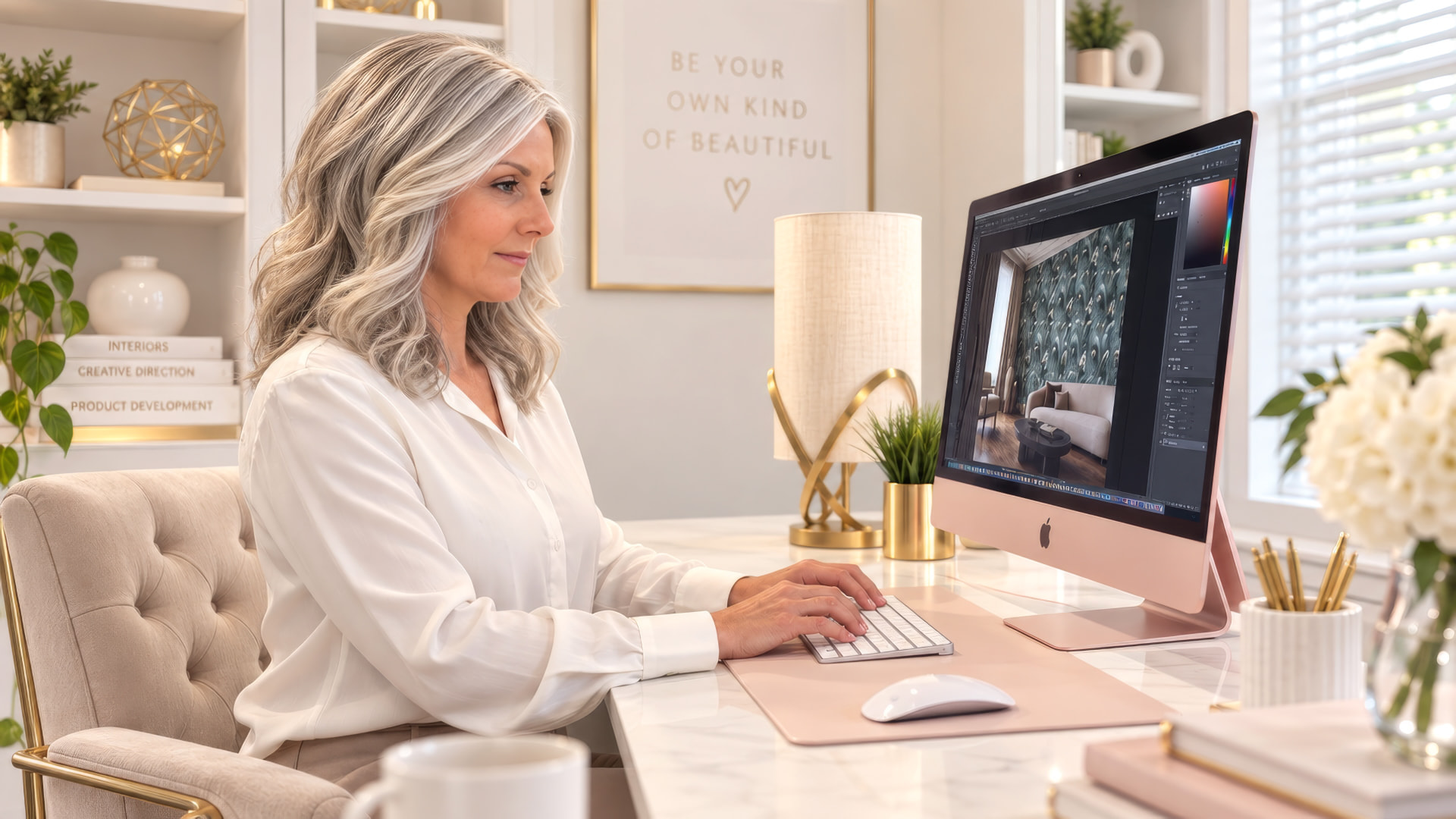
Every collection begins with one of our designers at the drawing board. Ideas arrive from architecture, botanical illustration, Art Nouveau ornament and the quiet geometry of old textiles — then they are drawn out by hand, line by line, until the motif has its own character.
Sketches are worked and reworked: weight of line, density of shade, the rhythm of a repeat, the way negative space breathes around a form. Nothing is generated in a hurry. A single motif can take days of iteration before it earns its place in the composition.
Development
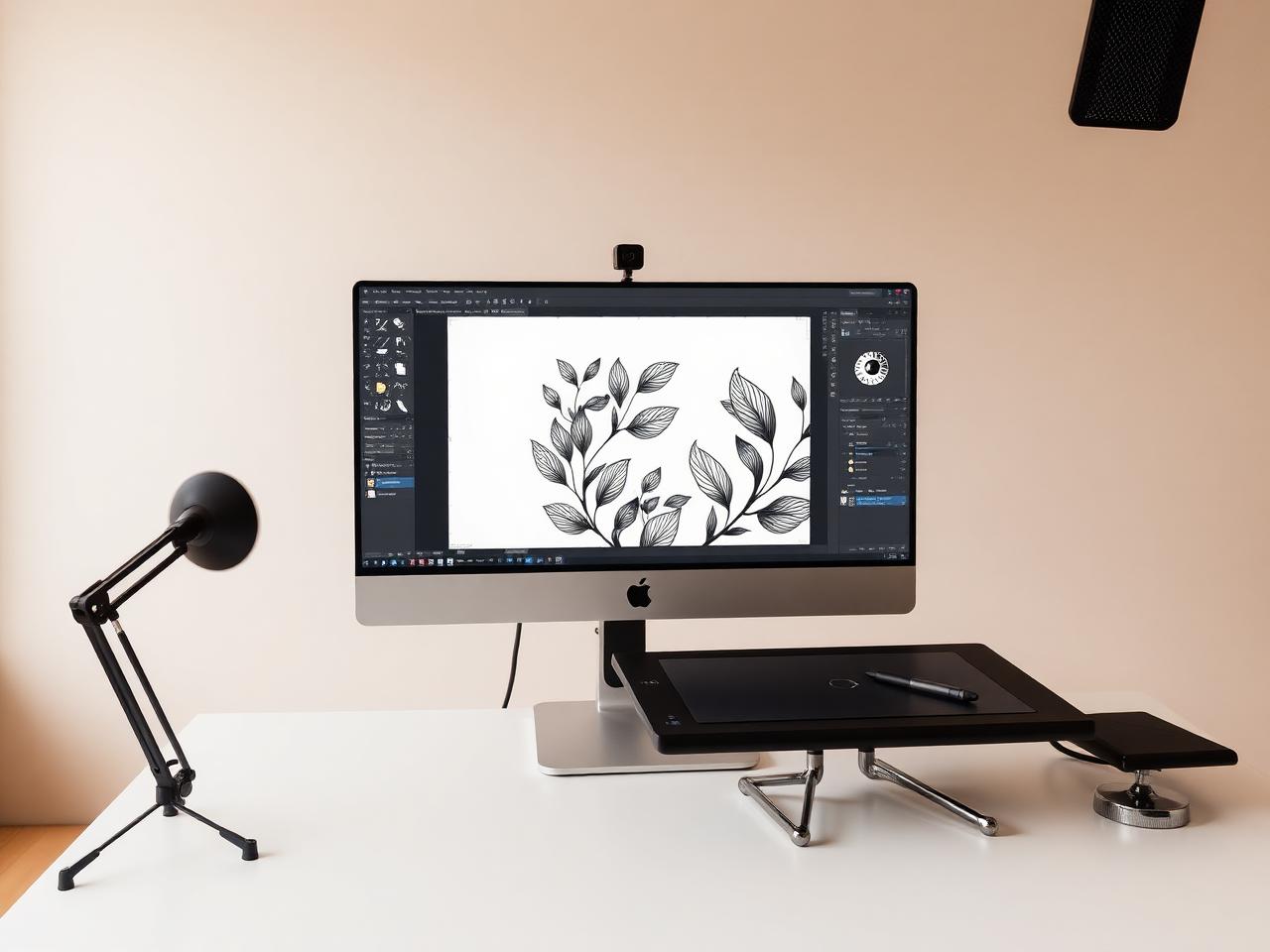
The original drawing is digitised into Photoshop at high resolution, cleaned of paper texture and scan artefacts, and separated into its component layers. Illustrator is then used to trace the patterns and motifs into precise digital elements — true curves that stay razor sharp at any scale.
Those elements are composited back in Photoshop, where tone, contrast and colour are balanced across the full artwork. The image is then taken through digital upscaling using AI upscaling techniques, and the final upscaled file is tested for pattern repeat and edited at full resolution to remove any artefacts.
Using an array of purpose-built software and a proven system for marketing and sales imagery, room sets, mockups and campaign visuals are created from the same artwork — assembled in Photoshop and DaVinci Resolve. These become the basis of the product concepts across all our shops.
Production & Printing
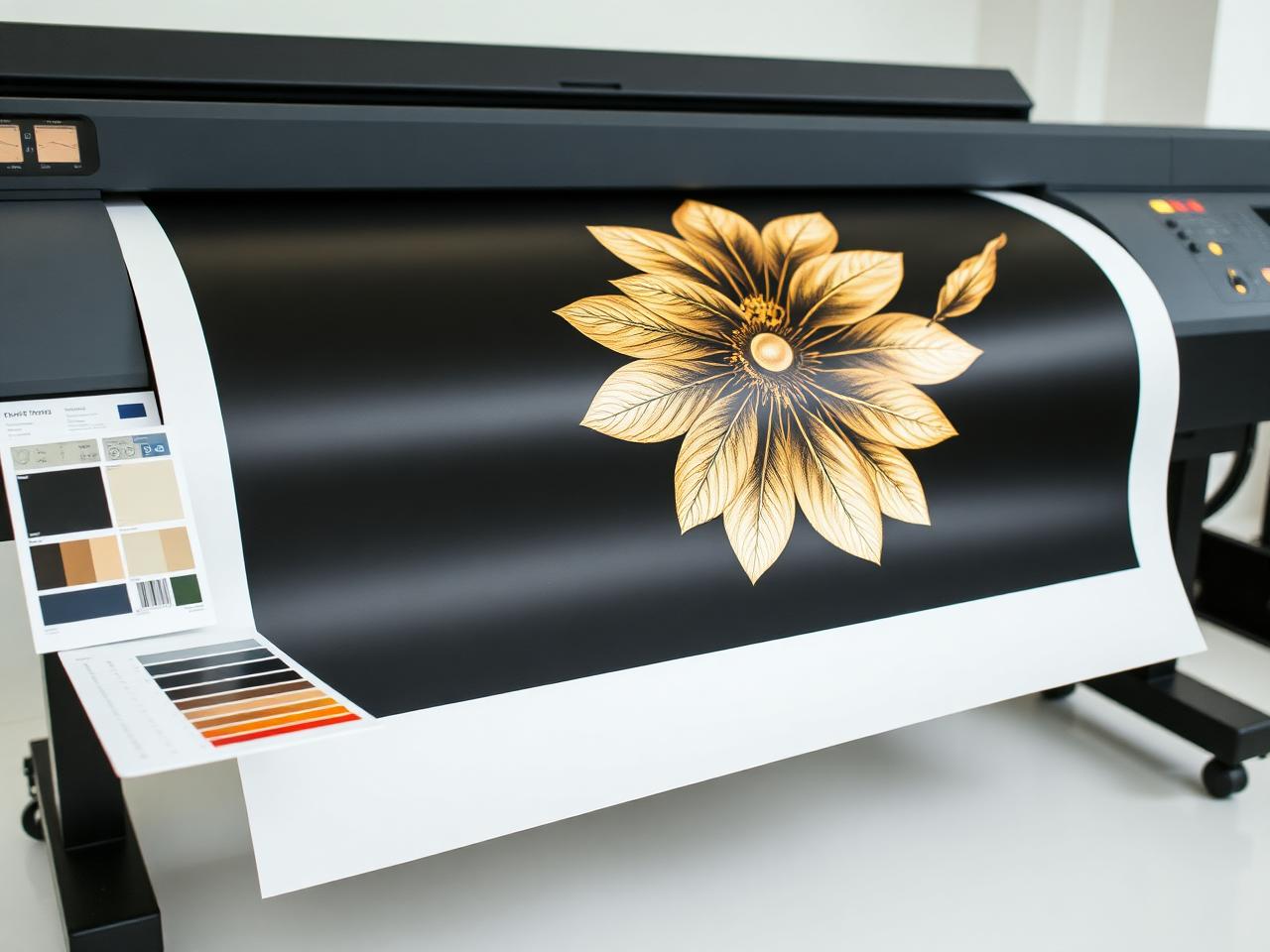
Nothing is printed until it is ordered. As each order arrives, the final upscaled master is sent into production and a colour-balanced print is made at exactly the size the customer chose — no compromise crops, no rescaled approximations.
Printing is done on calibrated wide-format giclée equipment. The print heads lay ink in microscopic droplets — down to picolitre size — in overlapping passes, so gradients resolve without banding and the finest ink line from the original drawing survives at full scale.
We print with archival pigment inks rather than dyes. Pigment particles sit encapsulated in resin on the surface of the paper instead of soaking into it, which is what gives the prints their rating of over a century of lightfastness under normal display conditions, with no visible shift in the golds.
The ink set runs well beyond four colours: matte black, photo black, light and light-light grey for the deep neutral tones our ink work depends on, alongside the chromatic channels used to hold warm gold and antique brass without them turning green or muddy.
Each paper and substrate has its own ICC profile, built in-house with a spectrophotometer and re-linearised regularly. Nothing goes out on a generic profile — black point, ink limit and dot gain are set per stock so blacks stay dense and the paper's own white stays true.
Substrates are heavyweight archival stocks: cotton rag and alpha-cellulose fine art papers, acid-free and OBA-conscious, in matte and smooth finishes, plus paste-the-wall wallpaper media for murals. Prints are then left to cure and outgas before they are touched.
Inspection & Packing
Every finished print is inspected by hand under daylight-balanced light before it leaves the studio — checked with a loupe for colour accuracy, registration, surface finish and any stray artefact.
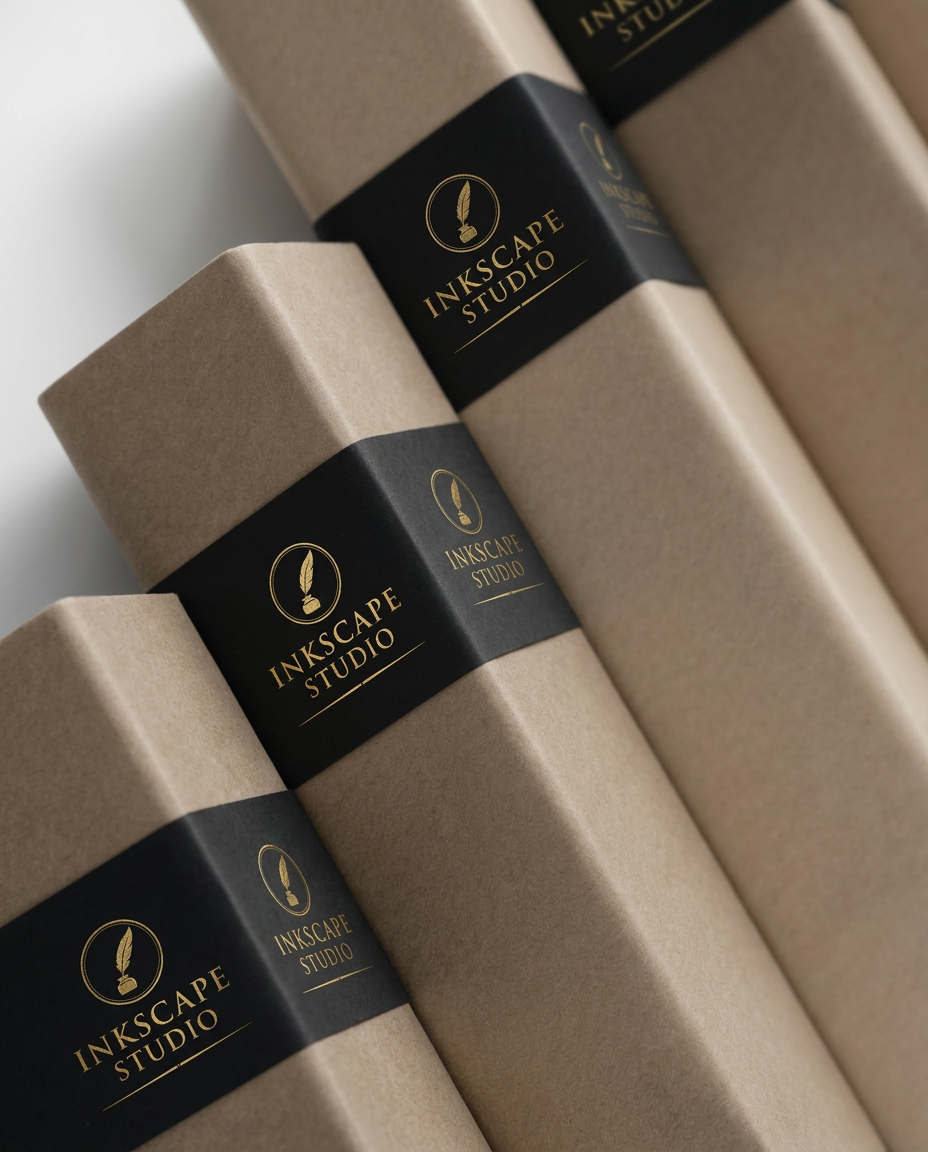
It is then interleaved with acid-free tissue and rolled or flat-packed into rigid protective packaging built to survive transit, finished with our own seal and label, and shipped worldwide so it arrives exactly as it left us. This is our printing and packing process.
Inside the Print Room
Ink, Paper & Precision
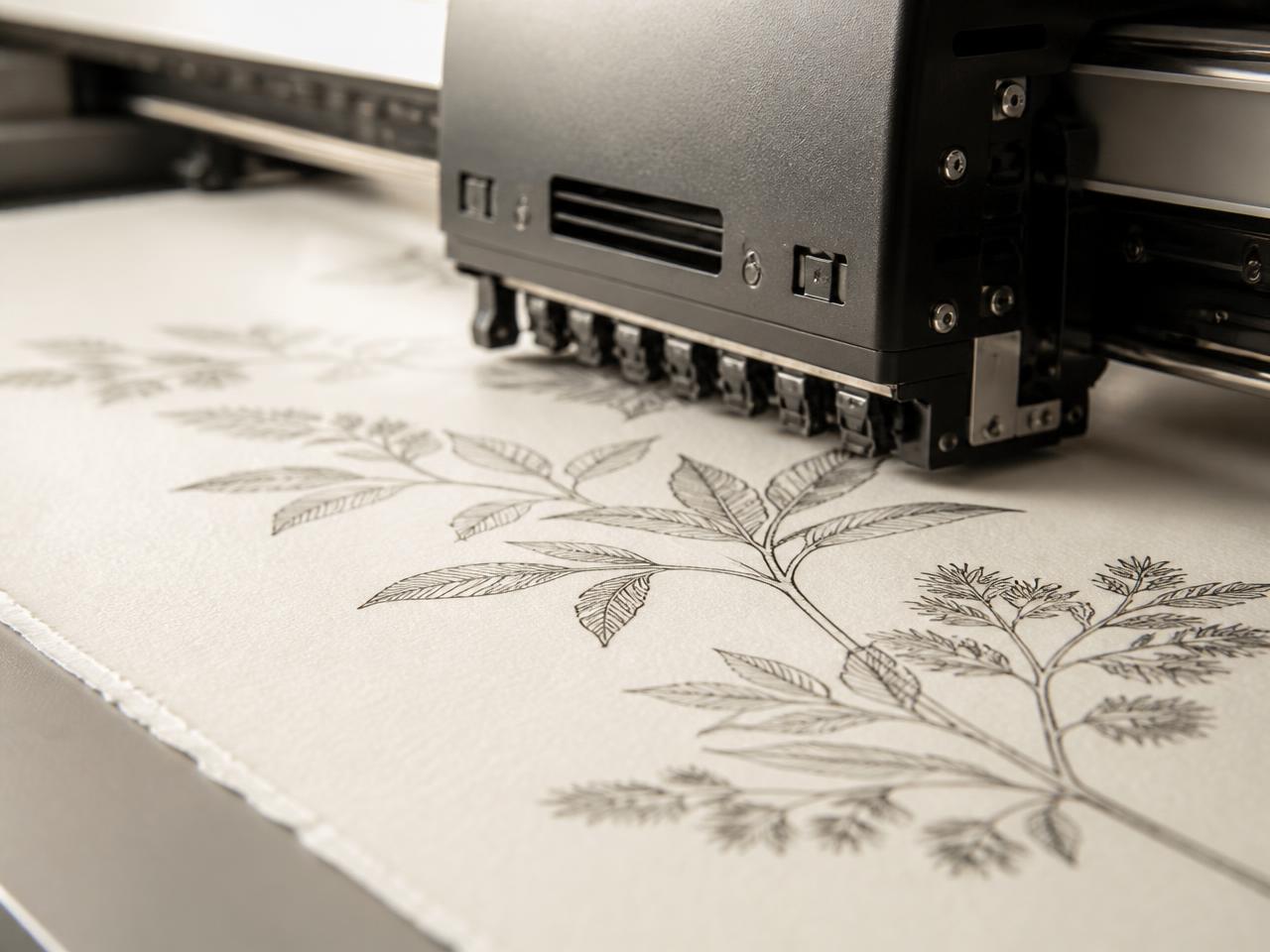
Micro-Droplet Printing
Picolitre droplets in overlapping passes — smooth gradients, no banding, hairline ink work held intact.
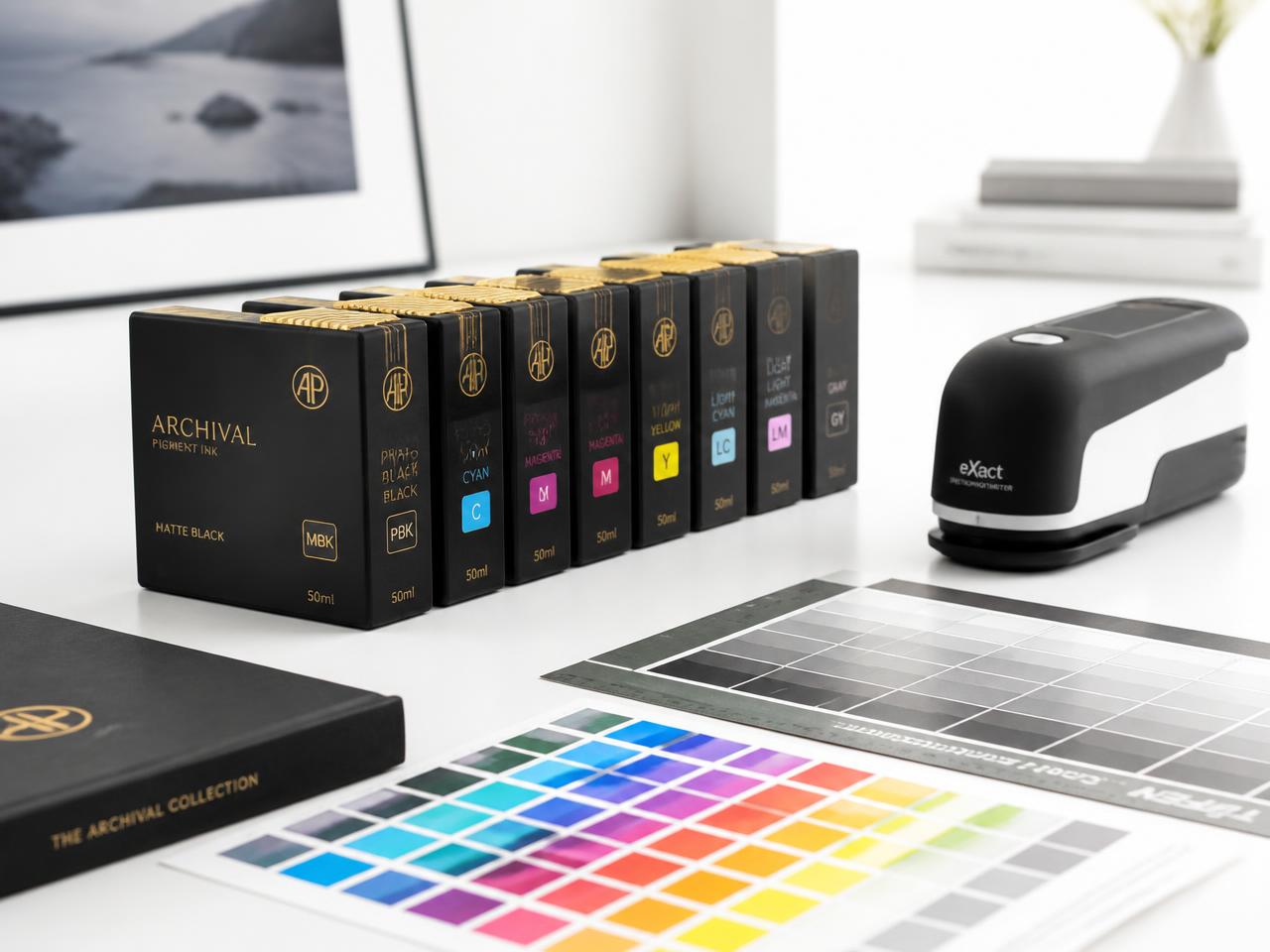
Archival Pigment Inks
A multi-black pigment set with resin-encapsulated particles, rated for over a century of lightfastness.
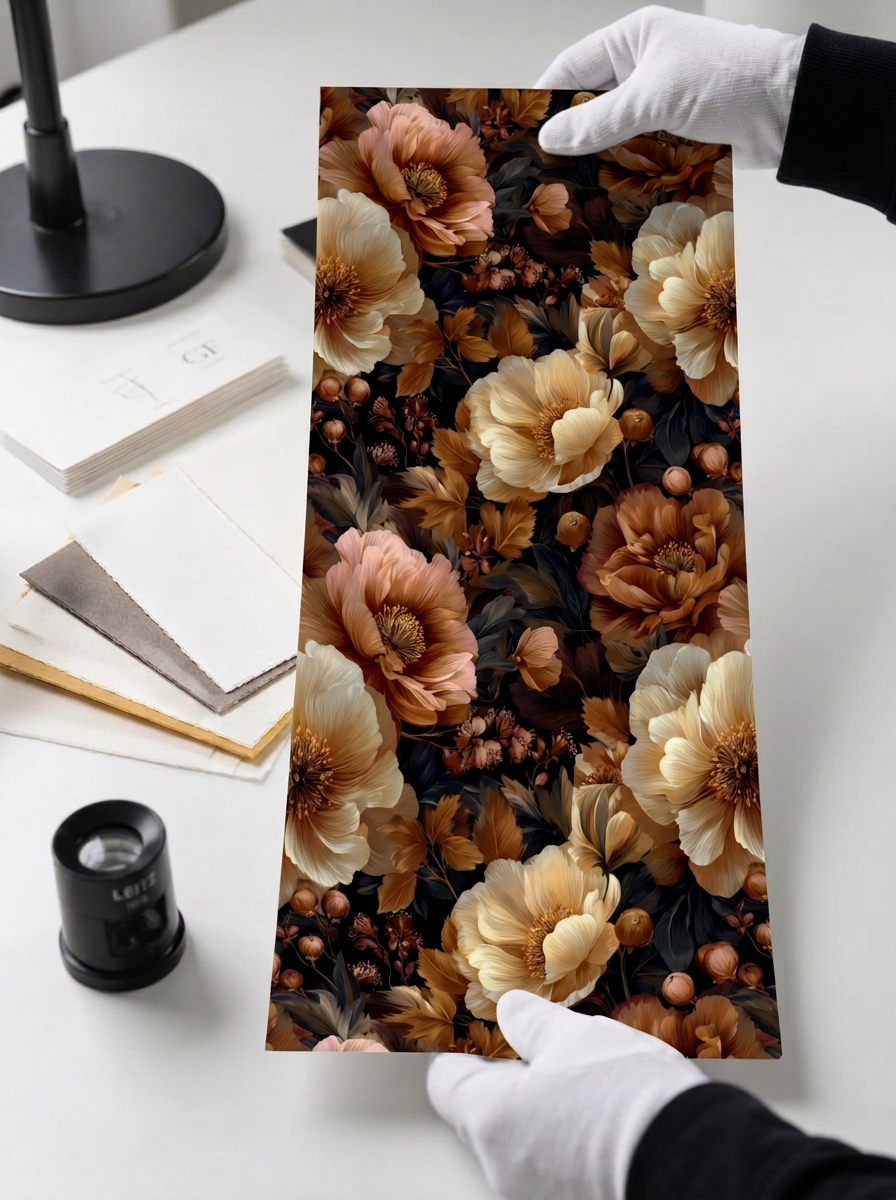
Profiled & Proofed
Per-substrate ICC profiles built with a spectrophotometer, then every print checked by hand before packing.